
生命之树
New archives on notorious Unit 731 reveal Japanese military’s cover-up of biological warfare_我的网站

一 | (ECNS) — From artificial intelligence reshaping the workplace to the rapid growth of industries such as integrated circuits, aerospace and biomedicine, Chinese students studying abroad are facing an increasingly diverse set of choices about what comes after graduation — and where they want to build their future. Those questions were at the center of a recent gathering of representatives from Chinese student associations at overseas universities, held at the headquarters of the Western Returned Scholars Association (WRSA) in Beijing. Discussions ranged from career opportunities in China to the role students can play in fostering greater understanding across cultures. One practical question ran throughout the event: How can young people with international experience make the most of new opportunities emerging in China? Xu Chen, executive director for campus and international business at Zhaopin.com, described the changing workplace as moving from a “human-driven” model toward “human-AI collaboration” and, increasingly, an “AI-driven” one. Artificial intelligence is not simply changing existing jobs, he said. It is also reshaping the skills employers value, making the ability to work effectively with AI and apply professional expertise to real-world problems increasingly important. China’s changing industrial landscape is opening up new possibilities as well. Xu pointed to integrated circuits, aerospace, biomedicine, high-end equipment manufacturing, industrial software and intelligent connected vehicles as areas offering strong prospects. Emerging fields such as quantum technology, biomanufacturing, hydrogen energy and nuclear fusion could create further opportunities. For Chinese students studying abroad, these trends are creating new links between the skills and perspectives they acquire overseas and the needs of fast-growing industries in China. But careers were only part of the conversation. Another recurring theme was how students living and studying overseas can help bridge cultural gaps through everyday interaction. At a roundtable on cross-cultural communication, returned graduates and representatives of Chinese student associations discussed how students can help their international peers gain a more nuanced understanding of China. Representatives from student organizations in six countries also shared experiences of campus life, community-building and exchanges with local students and communities. Sun Xinglun, vice president of the Association of Chinese Students and Scholars at Yale, said meaningful communication does not always require grand narratives. A celebration of a Chinese festival, a campus cultural event or even an everyday conversation with a classmate can provide a window into China. Rather than simply explaining China to others, students can begin with subjects their peers are genuinely interested in and draw on their own experiences of studying and living abroad. Such personal exchanges can make cross-cultural communication more natural and relatable. Chinese student associations are also taking on broader roles on overseas campuses. Beyond helping new arrivals adjust to university life, many organize academic events, career programs, cultural activities and community initiatives that bring Chinese students into closer contact with their universities and local communities. In doing so, students are not simply participants in campus life. Their experience of moving between languages, social environments and cultural perspectives can put them in a unique position to connect people who might otherwise have few opportunities to interact. For many participants, studying abroad is therefore about more than earning a degree. It is also about learning how different societies work, understanding different ways of thinking and becoming comfortable communicating across cultural boundaries. Whether they eventually return to China or continue their studies and careers overseas, those experiences can become an asset in an increasingly interconnected world. The program also included sharing sessions on overseas study experiences and employment trends for graduates returning to China. Participants later visited an exhibition tracing the more than century-long history of the Western Returned Scholars Association and the experiences of generations of Chinese who studied overseas before returning to contribute to the country’s development. 
 。
。
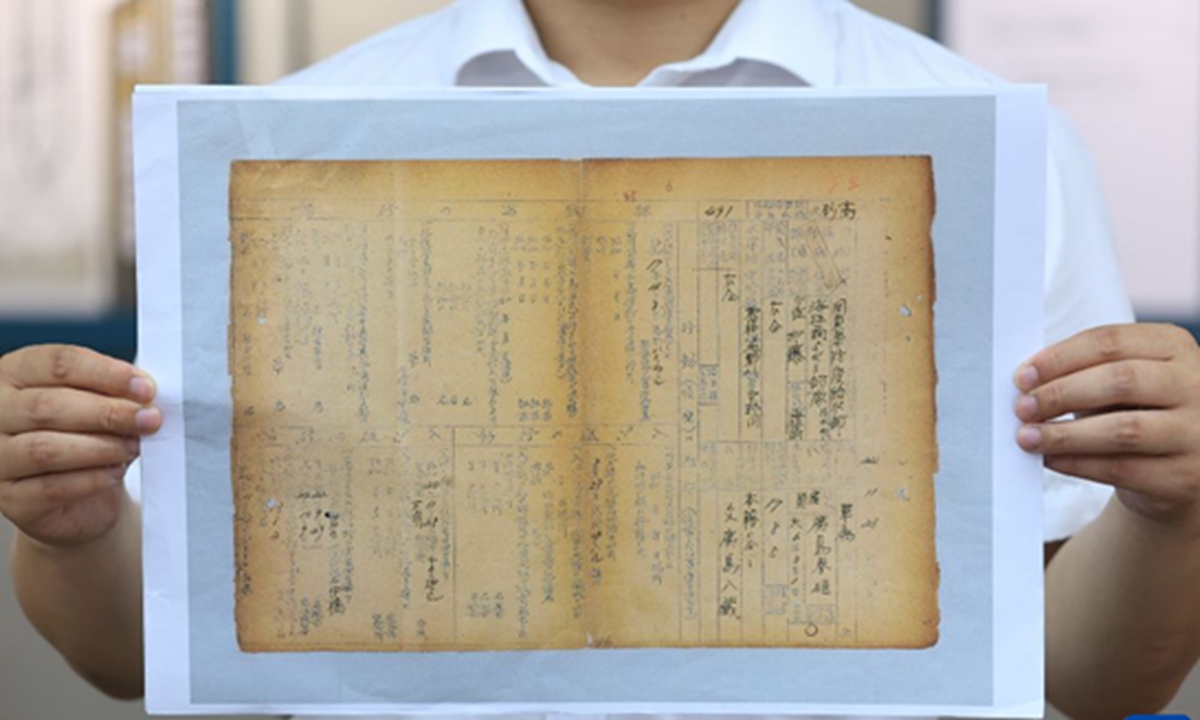
Newly released wartime records from the Hailar branch of Japan's notorious Unit 731 reveal how the Japanese military disguised biological warfare personnel as conventional infantry troops to conceal secret operations, including human experimentation.
The Exhibition Hall of Evidences of Crime Committed by Unit 731 of the Japanese Imperial Army released on Wednesday a 185-page archive of "personal background declaration" from the Hailar branch of Unit 731, also known as "Manchuria Unit 543". The documents show that the Japanese military concealed its biological warfare operations under the guise of conventional infantry units and shed new light on the Soviet Union's continued efforts after World War II to investigate and prosecute Japanese biological warfare crimes.
Unit 731 was a top-secret biological and chemical warfare research base established as the nerve center for Japanese biological warfare in China and Southeast Asia during WWII. At least 3,000 people were used in human experiments conducted by Unit 731, and more than 300,000 people in China were killed by Japan's biological weapons, according to the Xinhua News Agency.
The Japanese Kwantung Army established five branches of Unit 731 in Northeast China - in Hailar, Sunwu, Mudanjiang, Linkou and Dalian. Located in the northeastern part of the Inner Mongolia Autonomous Region, near China's borders with Mongolia and the Soviet Union, the Hailar branch served as a frontline base of the Japanese imperialist army for potential biological warfare operations against the Soviet Union.
The newly released 185-page archive contains key information on 156 members of the Hailar branch of Unit 731, including their names, military ranks, dates of enlistment, duties, transfers and postwar whereabouts. Researchers said the documents constitute first-hand official records for studying the branch's personnel structure and operations.
Jin Shicheng, a researcher at the Exhibition Hall, said the study produced two major findings. First, the documents reveal that the Japanese military recruited personnel under the cover of ordinary infantry units to conceal biological warfare activities. Some personnel, for example, were recruited under the names of conventional units such as Manchuria Unit 97, Unit 177 and Unit 201. They were then sent to Unit 731 headquarters for three months of training before being assigned to the Hailar branch. The deceptive recruitment system was intended to conceal the crimes committed by Unit 731, including human experimentation.
Moreover, the archive provides evidence of continued postwar investigations into Japanese biological warfare crimes. Of the 156 personnel listed in the documents, 145 were captured by Soviet forces after the war and detained in the Soviet Union. Four were tried in Khabarovsk between April and September 1950. The researcher said the records show that Soviet investigations and judicial efforts concerning Japanese biological warfare crimes continued after the trial held in 1949.
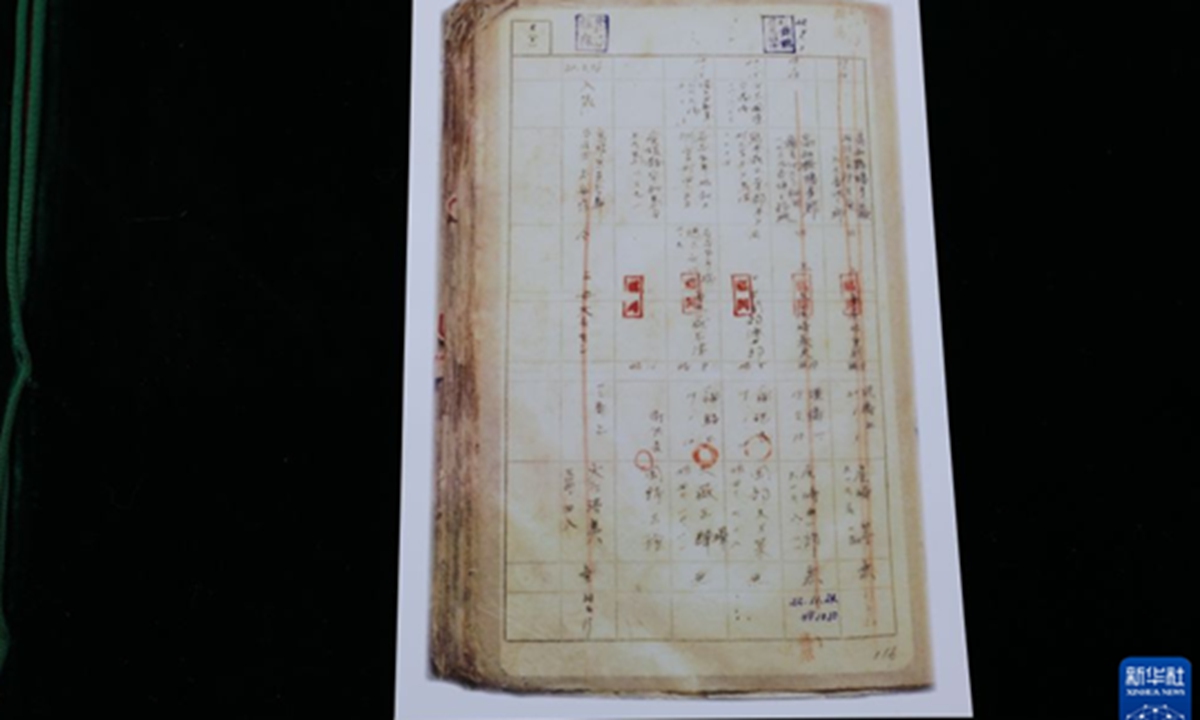
A photo published by Xinhua showed a record on medic Tanizaki Hitoshi in the "personal background declaration" records of Unit 731's Hailar branch. Tanizaki, originally named Ozaki Hitoshi, is documented in historical records that, together with his oral testimony, form a chain of evidence further substantiating the crimes committed by Unit 731.
Experts said the new revelation of the Hailar branch deepens research into Unit 731 and, together with previously obtained oral testimony from former members, form a broader chain of evidence. The official records exposed the efforts by the Japanese military to disguise their crimes against humanity and provided further evidence of the state-organized system behind Japan's biological warfare program, while adding important material to research on Unit 731 and postwar prosecutions.
Global Times
。
Current article:http://ycda0m.minshixuanhabing.bond/dzeemtl/hjo9sq.html
Published on:08:44:02


生命之树TXT下载声明:
1 我的网站免费提供的生命之树,均由网友上传,供下载测试之用,不作商业用途,下载后请二十四小时后删除!
2 我们根据txt小说全文所整理出生命之树txt电子书全集免费下载,由程序自动生成生命之树txt下载文件。
3 书友所发表的txt小说生命之树的相关评论,并不代表本站赞同生命之树txt下载或者支持生命之树的读者观点。
4 如果发现小说《生命之树txt全集》无法下载未及时更新请联系我们。如果您喜欢生命之树txt电子书,请支持作者到书店购买正版图书。感谢您的合作与支持。
5 好看的小说生命之树是作者"百年不渡"的最新力作,生命之树电子书由网友发布;小说生命之树版权属于作者所有,如果侵犯您的利益,请通知我们。